What is a bulb?
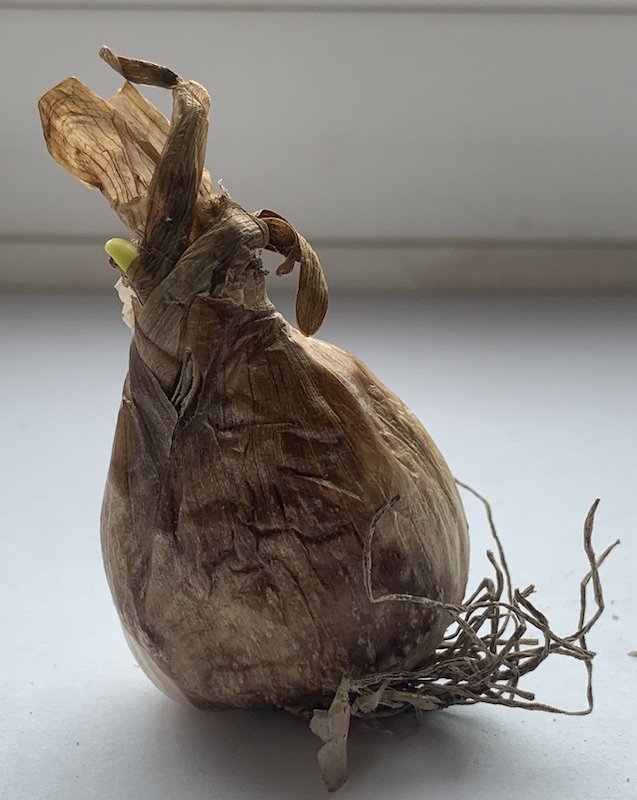
What is a bulb? Have you ever thought about what a bulb does? How can we grow beautiful flowers from a plain brown or white object?
Flowers have a lot of different parts and they have a life cycle like all growing things. A lot of spring flowers come from bulbs as well as other seasonal flowers.
Bulbs are the swollen part of the plant that acts as a storage vessel when the flower is in the dormant or resting stage. These will store nutrients for the flower that is going to develop in the following season. As the previous year flower dies the leaves wither and the nutrients return into the bulb. In this stage the flower and leaves can look at bit messy but it is best to allow the foliage and flower to die back.
The bulb is still alive and working hard to photosynthesise and store the energy in carbohydrate form to give the future flowers the best chance to grow well. If the leaves are cut or removed then this limits the amount of carbohydrates that will be available for the next season.
Bulbs can be planted for all seasons spring, summer, autumn and winter.
What is a bulb like inside?
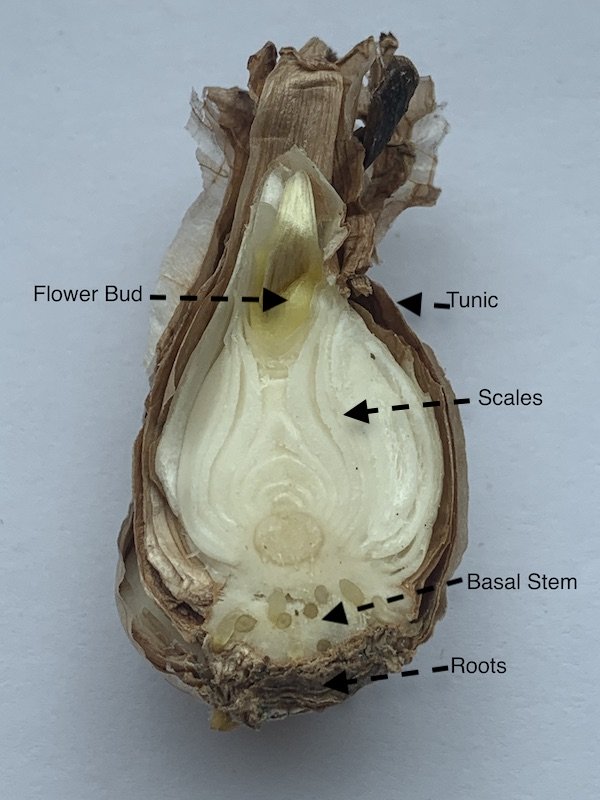
Have you ever wondered what is a bulb like inside? It is very similar to an onion as it has lots of layers but these are definitely not for eating.
These are planted underground with the root end down. For spring flowering bulbs these should be planted in the autumn of the previous year.
The Tunic
This is the outer casing of the bulb, it is multilayered and can have the feel of thin paper. This outer casing acts like a coat for the bulb and stops it from drying out.
Sometimes when bulbs are bought in a pack they can begin to sprout without being planted in the garden.
The Basal Plate
The basal plate is located at the bottom of the bulb and is a hard and compact type of stem that is very different from those we all know.. The roots will begin to develop from the bottom of the basal plate and go into the ground whereas the leaves and flowers will grow from the top side and emerge through the soil.
The Fleshy Scales
The fleshy scales are leaves that have been changed or modified to be able to help the plant. These are thicker than ordinary leaves and this makes them suitable to store nutrients, sugars and water or moisture.
The Roots
When a bulb is planted it is the roots that start to develop first. These play an important role in the chemical exchange of water, nutrients and gases between the plant and the soil, so is really the business end of the plant.
There is usually a main root, more secondary ones and lots of fibrous roots that travel underground in order to get the nutrients the plant needs.
The Flower Bud
The flower bud is at the centre of the bulb and this contains the next young plant to emerge. It is an underdeveloped plant that is waiting for conditions to be favourable or its season for it to grow.
Some Flowers that grow from Bulbs
Allium
Bluebell
Crocosmia
Daffodils
Fritillaria
Hyacinth
Iris
Snowdrops
Tulips
Planting Bulbs
The time a bulb is planted into the ground will depend on its flowering season. As stated previously for spring flowering bulbs, the planting time will be in the autumn of the previous year. For autumn flowering bulbs the planting time should be around spring in the same year. Allow about 4-6 months before you would like to see the flowers.
What is a bulb - Planting Depth
Different flowering bulbs come in many different sizes from large ones like the daffodils or lilies to the small ones like snowdrop or crocus.
The planting depth depends on the size of the bulb. If you measure from the bottom to the tip of the bulb then the planting depth will be around two or three times that measurement.
A bulb height of 5 cm (2 inches) can be planted around the 10 to 15 cm (4 - 6 inches).
Planting different bulbs in a garden container each needing a different planting depths can give a great display or an ongoing display depending on the type of flowers you pick. These can bloom all together or have each type bloom at different times to ensure that the container always has some colourful interest.
Bulbs can be planted under trees as they will flower before the tree is in leaf and give a colourful display. The most common flower you see is the lovely white, purple or yellow hues of the crocus and of course the many varieties of the beautiful daffodil.
The autumn crocus also gives a great burst of colour just as all the other plants are withering away before winter.
Enjoy choosing your bulbs.
- Home
- Planning a Garden
- What is a bulb
Recent Articles


-
Raised bed gardening can provide a lot of benefits and help.
Mar 14, 23 11:56 AM
 If getting down to the ground is hard and uncomfortable or the growing area is full of roots, consider doing raised bed gardening
 -
Having clay soils in your garden doesn't mean plants won't grow.
Mar 14, 23 11:54 AM
 There are such a lot of different plant varieties around, many will grow and thrive in clay soils.
 -
Building raised beds for gardening helps to fit them into an area.
Mar 14, 23 11:53 AM
 Whether it is to bring the garden up higher or to improve the soil, Building raised beds for gardening will help both of these issues.